
Unprecedented Iran-Israeli conflict set to escalate, says former U.S. diplomat Ryan Crocker
Spokane-born retired American diplomat Ryan Crocker anticipates the conflict between Israel and Iran will escalate in the coming days.
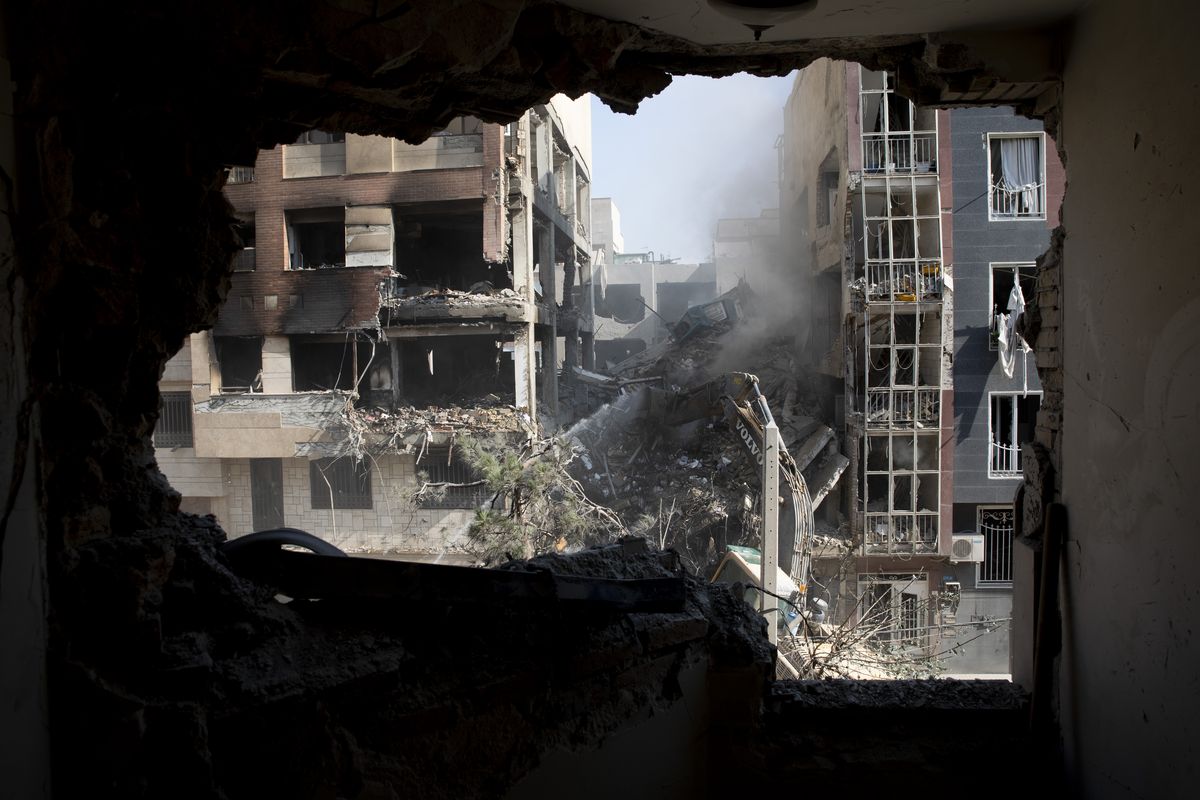
On Friday Israel launched missiles on Iran’s nuclear and military infrastructure, killing dozens of scientists and military leaders. Iran has since retaliated and the two countries appear headed to a wider, regional conflict that might involve the United States.
Crocker served as ambassadors to Iraq, Afghanistan, Syria, Kuwait, Pakistan and Lebanon under Republican and Democratic presidents. The nonpartisan career diplomat served at many key posts in the Middle East and southwest Asia for decades.
Israel’s goal in the attack is to destroy Iran’s nuclear capabilities and force the government to abandon its uranium enrichment program. According to Crocker, the widening conflict is likely to have the opposite effect.
“Israel has effectively said that Iran’s nuclear weapons capability must be eliminated, and that means by force or by negotiation. But the dynamic within Iran is such that I think it is highly unlikely they will surrender and foreswear any enrichment capability forever,” he said.
Beyond this stated aim, Israel hopes their assault will foment regime change in Iran, Crocker said, adding that is even more unlikely.
“I’ve seen regime change up close and personal in Iraq and in Afghanistan. That is not done from the air. It is done by boots on the ground. And I don’t see any particular likelihood that Israeli air strikes, or even U.S. and Israeli air strikes are going to be sufficient to topple the Iranian regime,” Crocker said.
It would be “utterly insane” for either Israel or the United States to put those boots on the ground and cause a much larger intractable conflict than seen in any previous war in the Middle East.
“Iran is a country of 90 million people. We saw what the consequences of invasion and occupation were in countries like Iraq and Afghanistan that had about a quarter of that population,” Crocker said.
A tertiary goal in the attack is to remove focus from the ongoing conflict in Gaza, he added.
“That the world’s attention now turns to this particular struggle between Iran and Israel directly and that Gaza will move to the second section. Israeli violence will continue, or even escalate, with the world no longer paying any attention at all,” Crocker said.
So far the United States has avoided direct conflict with Iran.
Shortly after Israel’s attack Secretary of State Marco Rubio said America had not assisted Israel. Crocker does not expect direct engagement from the United States unless Iran attacks U.S. assets in the region, which the regime has previously threatened to do. At this time Crocker believes such an Iranian attack is unlikely.
Crocker expects the next escalation would be for Iran to attack the Gulf states’ oil infrastructure and close the Strait of Harmuz. These actions would cripple international trade routes and greatly increase oil and gas prices across the globe.
Despite the United States publicly taking a hands-off approach to the conflict, Crocker does not believe Israel would take this action if the president of the United States was opposed to it.
“I do think Israel read in whatever U.S. response they received that there was a green light or at least the absence of a red light,” he said. “Israel would not have moved to undertake the attack if the United States had strongly objected.”
The only way for the conflict to de-escalate now, he said, is for Trump to tell Israel to stop their attack.
“The only decisive action that could influence the course of the conflict would be for the president of the United States to say to Israel, ‘Stop, enough. Stop now.’ I don’t think that will happen,” Crocker said.