
Ask Dr. Universe: How do germs enter the body?
Washington State University
Dr. Universe: How do germs enter the body? – Amari, 8, Indiana
Dear Amari,
There are many different ways germs can enter the body. Sometimes, they find a way in through an opening like the mouth, nose, eyes or a cut in the skin.
Most of these germs – what scientists call viruses and bacteria – are so small, we’d need a microscope to see them.
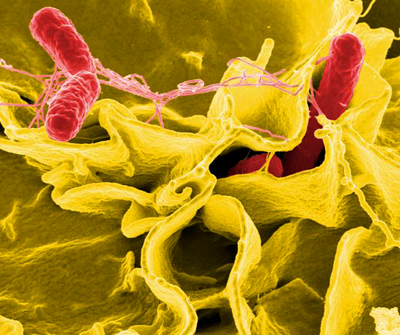
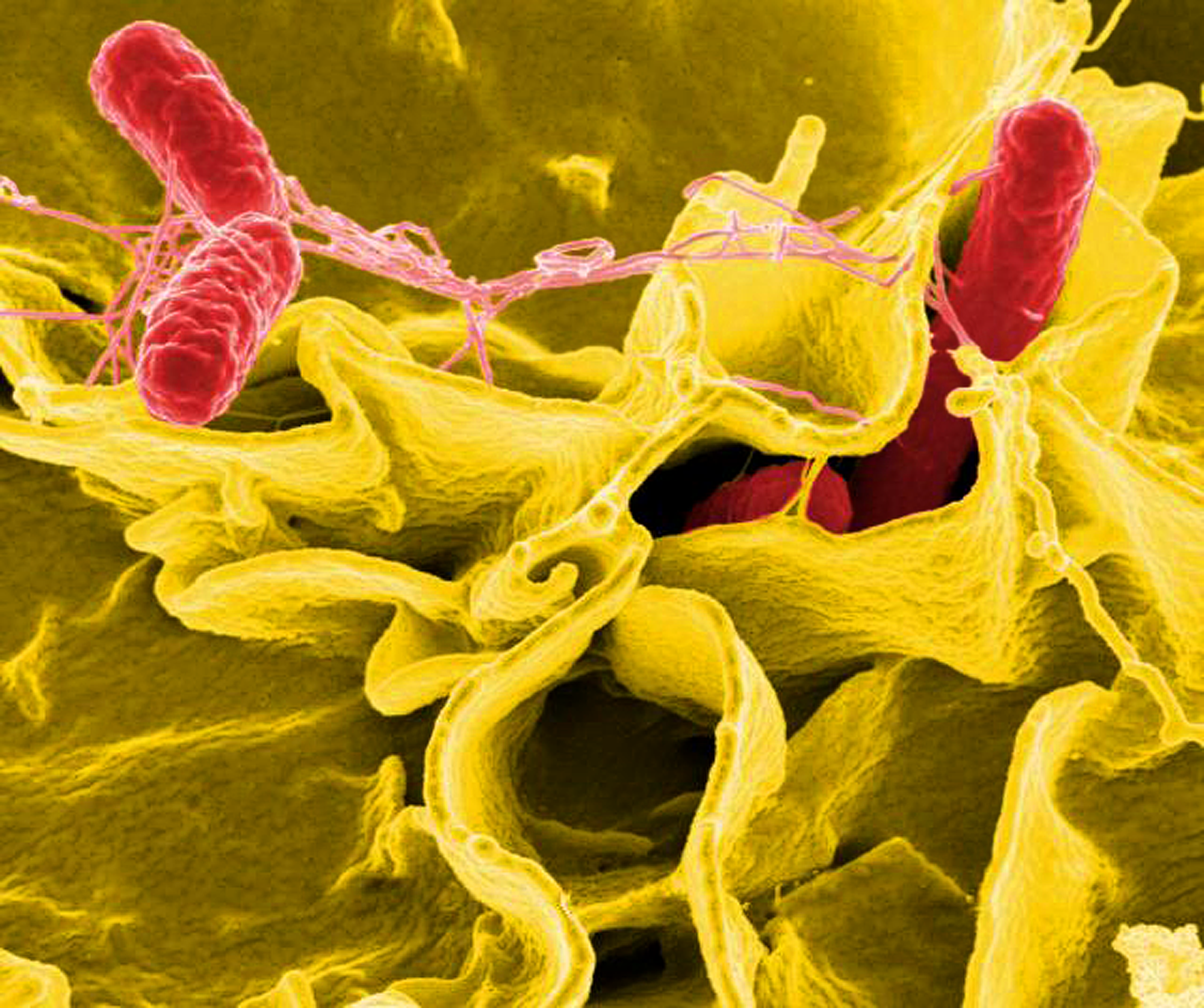
My friend Leigh Knodler is a researcher at Washington State University who works with a particular kind of bacteria called Salmonella.
Salmonella can sometimes live on food such as undercooked chicken or unwashed fruits and vegetables. It typically enters the body through the mouth when someone takes a bite of food.
If we followed Salmonella through the body, it would pass through the esophagus, the stomach and finally into the intestines.
It turns out that lots of germs have to cross a kind of membrane, or barrier, to get into the body’s system. For instance, Salmonella must cross a membrane that lines the intestines.
When the bacteria pass through the membrane, they can get into the blood and circulate through the body.
Sometimes, germs will also pass through the thin membranes that cover the eyeballs when we touch our eyes and face. It’s rare, but even Salmonella can sometimes enter the body this way.
Finally, some germs can enter through the nose, as well. When germs in the air make it down into someone’s respiratory system, the germs can pass through the membranes of the lungs and into the blood.
For instance, SARS-CoV-2, the virus that causes COVID-19, often enters the body through the nose or mouth through tiny saliva droplets. The virus travels down into the airways and into the lungs.
While germs might enter the body through contaminated food or saliva, other germs might find a way into the body through mosquito or tick bites. The viruses and bacteria do what they can to survive and reproduce.
But the good news is you have a system primed and ready to defend you when they arrive. The immune system, which is made up of cells, tissues and organs, can recognize the invaders might make you sick. The system kicks into gear and works to protect you.
You know, not all bacteria are bad, but there are things we can do to help keep the bad germs from spreading. For instance, we can cover our mouths when we sneeze.
With COVID-19, we can wear facemasks that help us keep our germs to ourselves and help stop the coronavirus from spreading to others. We can also wash our hands frequently, especially before we eat, drink, prepare food or use the restroom.
It’s also great to know that there are scientists who study viruses and bacteria, including Salmonella, to help us better understand these germs and how they work.
Through research, people are developing vaccines and medications that can help us prevent the spread of viruses and bacteria – and help improve the health of humans all around the world.
Sincerely,
Dr. Universe
Know a kid with a science question? Adults can help kids submit a question at askdruniverse.wsu.edu/ask.