
Associate director Seth Sklar-Heyn keeps an eye on reimagined “Phantom of the Opera”
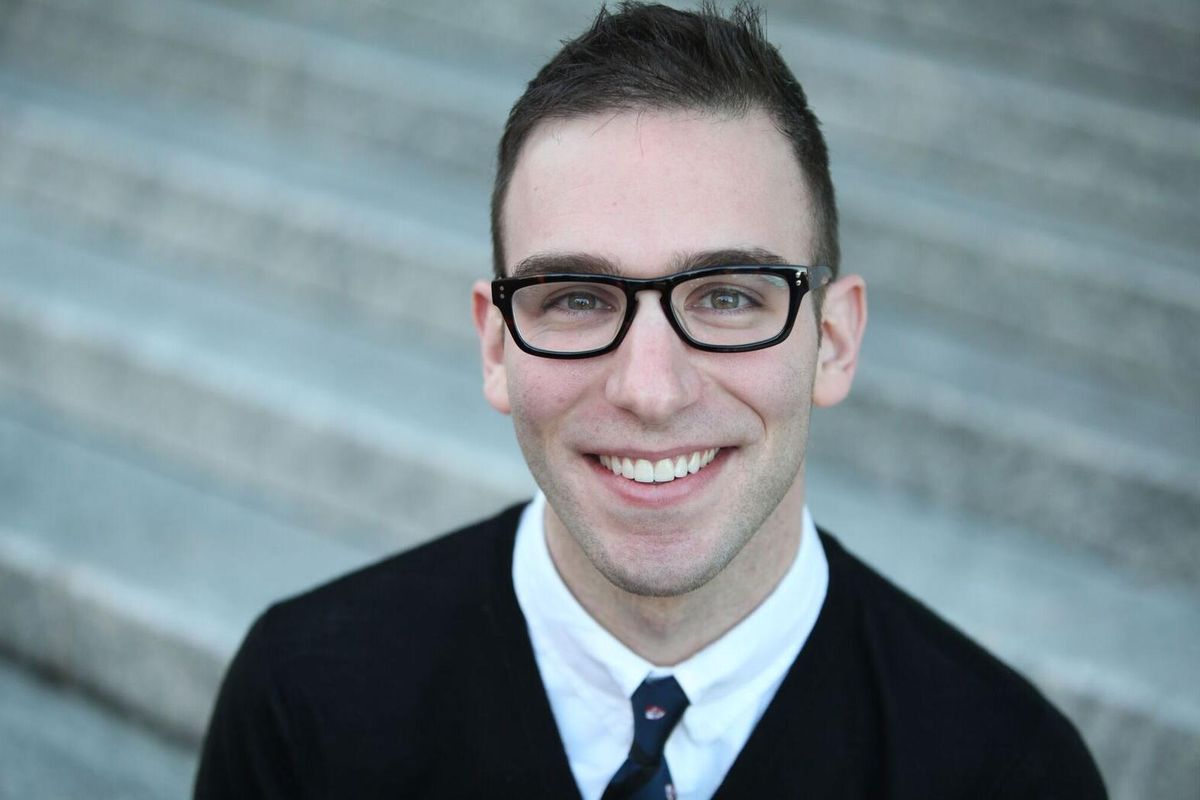
As a child, Seth Sklar-Heyn always wanted to know what went on behind the scenes.
During visits to Disney World, for example, he enjoyed the theatrical nature of the experience, with the scenic design, music played throughout the park and employees literally called “cast members,” but he was more interested in what happened behind doors marked “Authorized Personnel Only.”
If Sklar-Heyn’s childhood self could see him now, he’d be ecstatic, as he now has unlimited access to the longest-running show in Broadway history as the associate director of the Broadway and touring productions of “The Phantom of the Opera,” which opens at the INB Performing Arts Center on Wednesday.
As associate director, Sklar-Heyn is essentially the director’s right hand man and is involved in nearly every aspect of the production.
He oversaw the casting process and continues to do so when new cast members enter the show, and during rehearsals, he worked with producer Cameron Mackintosh and national tour director Laurence Connor and made note of their comments on the production.
When a show is up and running, it’s Sklar-Heyn’s job to ensure the director’s vision is executed night after night.
“I don’t like the word ‘maintain’ because I don’t want it to be exactly the same all the time,” he said. “But I end up being a reference point and I’m the one who can come in and say, ‘No, we have to balance this in a different way. We’ve gone too far in one direction. We have to get back to an original intention or an original idea that the director had.’ ”
Sklar-Heyn tries to watch the Broadway production at least once a week and often flies out to see the touring production. He’ll visit the show during its second week in Spokane.
His childhood curiosity lends itself particularly well to this part of his job.
“More often than not, as an audience member, I’m looking at things I might not be looking at if I were not interested in trying to decode and decipher how it all works,” he said.
When watching “Phantom,” Sklar-Heyn looks for things that could be adjusted, like a character’s blocking, and suggests changes that can help actors make their performances feel less like a routine.
He also looks for general upkeep in the production, checking for costumes, scenic elements or lighting that may need to be replaced.
On the other hand, Sklar-Heyn also watches the show for “things that are wonderful,” which includes seeing understudies take the stage for the first time and make the role their own.
“It’s also commending people when finding new ideas or finding ways through something,” he said, “or if they’ve taken a note and implemented that note, saying, ‘That moment was so much clearer’ or ‘You could really feel how you held the room by that adjustment that you made.’
“It’s constantly trying to work with people and make sure we’re delivering to the audience something that’s as clean and clear as possible when it comes to the storytelling.”
The story of “The Phantom of the Opera” has been told time and time again over the musical’s nearly 31-year history.
A musical genius referred to as the Phantom (Derrick Davis), masked because of a disfigurement, hides beneath a Paris opera house, having tutored a young soprano singer named Christine Daaé (Katie Travis). In an effort to get closer to Daaé, the Phantom forces the opera’s owners to give her a lead role.
The Phantom eventually appears in Daaé’s mirror, bringing her into his lair and confessing his feelings for her. But Daaé loves the opera’s new patron Raoul (Jordan Craig), so the Phantom concocts a plan to keep Christine for himself, which Raoul tries to foil.
In 2012, composer Andrew Lloyd Webber and producer Mackintosh reimagined the musical with new scenic work from designer Paul Brown, lighting by Paule Constable and staging by director Connor, all aiming to be more realistic.
With Brown’s designs, onstage is clearly onstage. When the story moves backstage, the set loses the proscenium and opera boxes. When the performers are in the manager’s office, they’re in a small, confined space.
“Whereas with the original production, (Maria Björnson’s) design was very different, theatrical in a very different way, depended on a big swath of cloth going across the stage to define the space and then there was a table and it was the audience’s job to fill in the blanks,” Sklar-Heyn said. “I think what we’ve done on the touring production is not get rid of all the blanks, but we’ve filled in some of them.”
The revised production also features a story with more realistic characters.
“We’re really focused on the real-life perspective and the real-life issues these people are dealing with,” Travis, starring as Daaé, said. “Instead of a phantom who’s a svengali and who’s hypnotizing Christine, she’s making the choice. She makes the choice to go into the mirror. She’s making these choices to follow her heart the best she can.”
“It’s about real people,” Sklar-Heyn adds. “The Phantom is a man who … suffers from how the world treats him because of that deformity. He loses some of those magical powers, the svengali characteristic. In the Broadway production … he has this ability to control things and hypnotize and manipulate in a very other way. But on the touring production, we’re talking about a man who, as the text dictates, is a great mind that’s misunderstood.”
These changes, both big and small, go back to what Sklar-Heyn studies at every show. And it’s these changes that Travis, who saw “Phantom” for the first time at the age 4, loves most about the production.
“We’re always getting notes and reworking things and retweaking things,” she said. “Very small tweaks, nothing major, but we’re always changing our intentions and ideas in order to let the show evolve.”
After 25 years, some people questioned Mackintosh and Webber’s decision to reinvent “Phantom,” but Sklar-Heyn said Mackintosh is the first to say, “Why not?”
“Andrew’s material has become an incredible foundation for these stories to exist upon and it’s important for us to acknowledge that and hold onto that but also say, ‘Look at how many ways people can produce ‘Hamlet,’ ” Sklar-Heyn said. “I’m not saying ‘Phantom of the Opera’ is ‘Hamlet,’ but it’s material that now has become such a part of the industry and the community of theatergoers that it can withstand new examination. It can withstand a new lens through which to see it because we still have Andrew’s incredible melodies, David Cullen and Andrew’s orchestration, all the lyrics by Richard Stilgoe and Charles Hart.
“We have all the things that have sustained the original production, and all we’ve done is changed how you see it and how it moves.”