
Kizuri: A Wealth of “Good”
Spokane store balances local, global focus
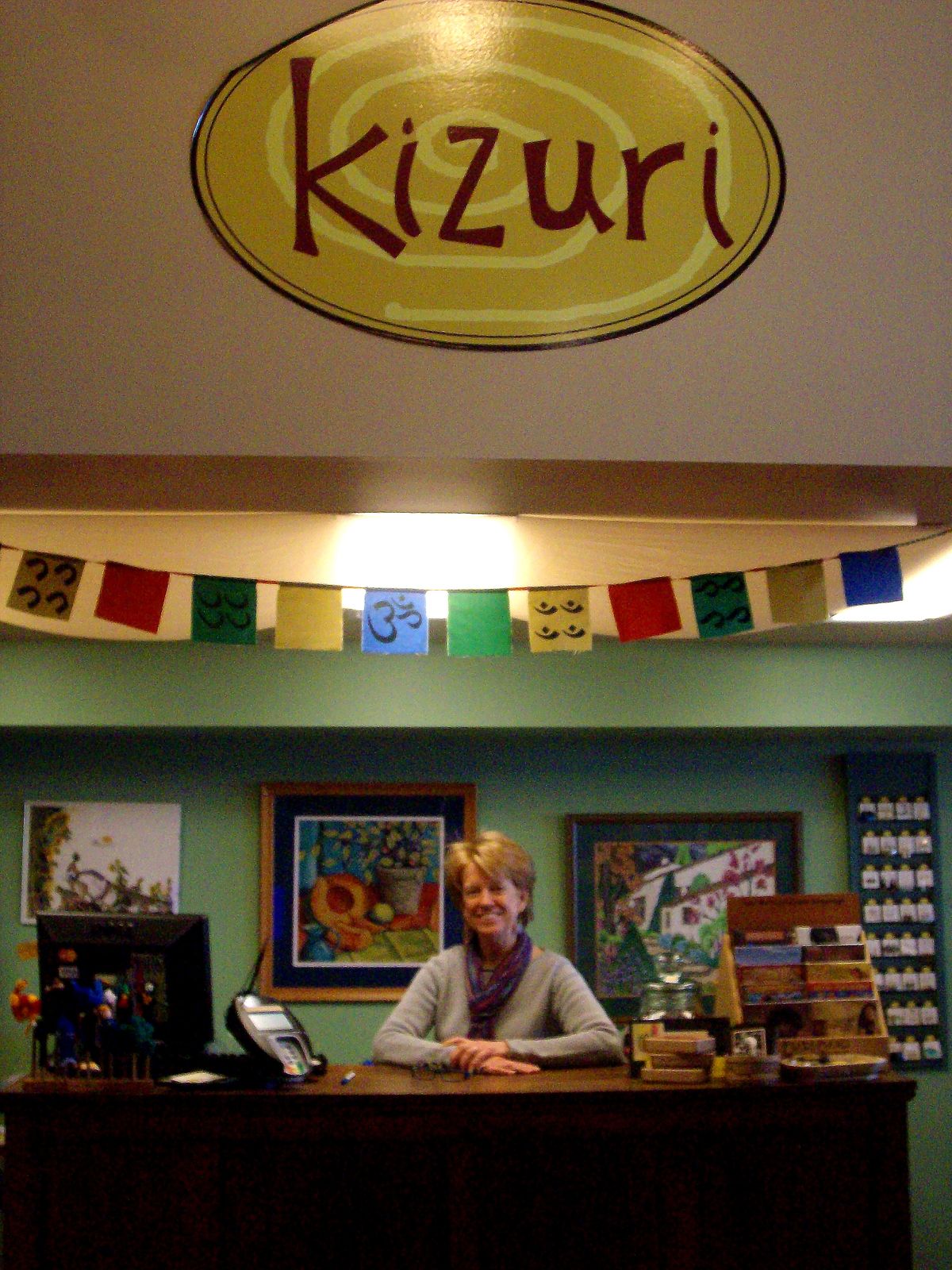
It was one of those beautiful, sunny September afternoons in 1980, when Kizuri owner, Kim Harmson and her husband, rolled through Spokane, bikes strapped on the back of their car.
En route from Kim’s native Chicago, the plan was to settle in Seattle so that she could continue going to school. But Spokane made an impression and plans soon changed.
“We were blown away by the beauty of the area and the friendly people,” says Harmson. “After eating lunch at The Onion, the owner grabbed us a couple of beers, sat down and said ‘So tell me your story.’ We had a great conversation and a great time and I think it kind of sealed the deal for us.”
Spokane is much the better for it.
Kim’s decision to open Kizuri—a Fair Trade, earth-friendly retail store—in mid-October last year, filled a void that Global Folk Art left when its doors closed in April, 2008.
The owners of Global, in the same location, had become friends of Kim’s when she’d volunteered there with her children years ago, in an effort to teach her kids about the importance of social justice and fair trade.
“Opening the store was completely spontaneous,” said Kim, “But it felt like the right thing to do.”
Although Kim’s pre-Kizuri career was primarily as an educational consultant who taught “life balance,” she had also worked part-time at the largest Fair Trade wholesaler in the area, Ganesh Himal.
Owned by her good friends, Denise Attwood and Ric Conner, it was here that she learned the importance of fair trade through the real life stories of the craftsmen and craftswomen from Nepal, whose products Ganesh Himal carries.
A global movement, Fair Trade aims to build equitable and sustainable trading partnerships and create opportunities to alleviate poverty for men and women.
In addition to negotiating a fair price, working relationships are kept open and transparent, safe and healthy working environments are provided and better environmental practices and responsible methods of production are encouraged.
Kim’s current role as fair trade retailer is a good combination of her past two career endeavors; by opening her store, she’s educating the community about the importance of fair trade and the balance and goodness that comes from it.
“Kizuri” means “good” in Swahili, and you feel this when you walk in.
Just smelling the fair-trade organic chocolate and coffee and touching the woven baskets or exquisite hand crafted pottery, and you feel a connection, no matter how remote, with the lives of their creators.
It’s those connections that make the Kizuri experience so unique and important to the already loyal base of customers and new customers. (Local customers also recently awarded Kizuri second place for “Best New Business” in the Pacific Northwest Inlander’s ‘Best Of’ issue.)
“The response has been heartwarming. People come to the store with the old newspaper article [before we opened] cut out and folded up in their purse, wanting to shop here because they believe in Fair Trade,” said Kim. “The people who work in this neighborhood have been very strong and consistent supporters.”
Visitors can read the descriptions of wares and the producers who created them alongside the items. Kim also has plenty of stories about how fair trade is life-changing for these people.
Such as original T-bag Designs from Cape Town, South Africa, where women paint used tea bags dried in the sun, to create beautiful ornaments. Nomsa, a young, single mother of two, earned enough Fair Trade profit from her creations to buy a home for her and her children, where she is so thankful to “…listen to the rain on the roof, and know that her children are warm and dry.”
There’s Zulugrass—a company located in the Great Rift Valley of Kenya and Tanzania, where the Maasai people suffered a terrible drought in2001, devastating Kenya’s pasture lands, thus their livelihood, as most of their cattle died.
When the men had to drive the remaining cattle hundreds of miles away for better grazing, the women were left in desperate need of income to support themselves and their children.
But with the help of Phillip and Katy Leaky, who live among the Maasai, over 1,000 women now have the opportunity at Zulugrass to earn income to better their lives—by using their expert beading skills to create exquisite contemporary jewelry made from the sustainable resources around them.
There’s also Plan Toys, which—although not certified Fair Trade—is the world’s first and largest manufacturer of recycled wooden toys.
Made from rubber trees too old too produce latex, the toys are produced using environmentally-friendly materials. The company even formulated its own E-Zero Non-Formaldehyde Glue, of which they shared the recipe with all of Thailand’s toy manufacturers.
Plan Toys conducts business in a socially responsible manner, through programs aimed at conservation, helping people, and promoting the arts.
Although many of Kizuri’s products come from halfway around the world, Kim is also very conscientious about the local economy. Half of her items are purchased through one of the five Spokane fair-trade wholesalers, or directly purchased from a local producer, like Mountain Madness soap, based in Coeur d’Alene, Zena Moon Candles, from the Perry District, and jewelry by Spokane metal artist, Tim Biggs.
“I try to buy as much locally as I can and support my neighbors,” says Kim. “And I’m very fortunate to be part of the West End business community that’s all about that as well—breaking down walls, not building them up.”
Kizuri’s location in the East End’s Community Building—at W. 35 Main—is technically for non-profit businesses, but Kim’s unique for-profit business plan appealed to building owner Jim Sheehan, and Kizuri has promised to operate with community involvement, will educate people and give 7.5 percent of profits back to the community each year.
A good example of this will come in May when she will partner with Ganesh Himal to focus on International Women’s Day, through a visual display of 25 years in the lives of Nepali women and how Fair Trade has impacted their lives.
Beautiful copperware from Nepal will be for sale, all proceeds benefiting the Basari Health clinic, currently being constructed in a remote Nepali village, where there has been no health care before.
Also upcoming, will be a display of batiks from an artist in Chile, Mata Ortiz Pottery, traditional Guatemalan weavings, highlighted with a demo of the craft, and the serving of fair trade, organic coffee from Guatemala (from a local Fair Trader).
“I’m just so happy to be here,” says Kim. “It’s very much about the store right now, but I enjoy making the connections with people—with the artisans, the conscious shoppers—it’s all very rewarding. What I love is the balance between global and local here.”