
Critter Watch
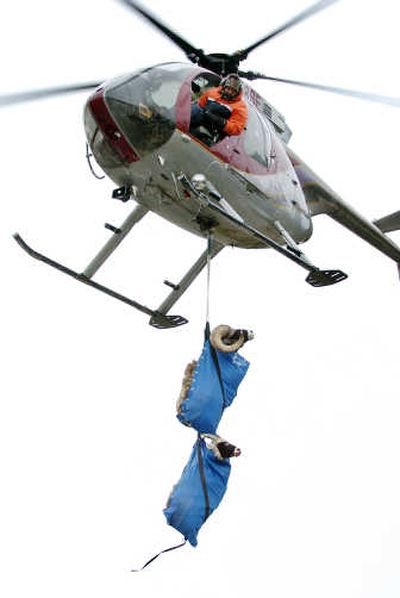
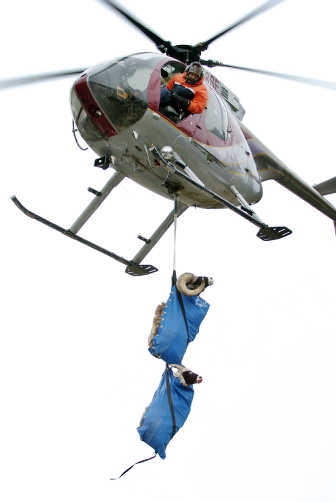
Managing bighorn sheep is a moving experience for modern wildlife managers.
The sturdy cliff-dwelling critters are particularly susceptible to diseases transmitted from domestic livestock. Thriving bighorn herds have been decimated in months by disease outbreaks.
Wildlife agencies often trap bighorns from healthy herds and relocate them to bolster other groups.
Last week a New Zealand helicopter crew that specializes in shooting nets over bighorns and flying them to new homes captured about 40 bighorns at Flathead Lake for a fee of $650 a head. Wild Horse Island, well-protected from domestic diseases, is used as a nursery for producing wild sheep.
Once a sheep is netted, “muggers” jump from the helicopter, hogtie the animal, blindfold it and tie a two-piece bag around its body so it can be air-lifted.
“Blindfolding them is the key,” said Bruce Sterling, Montana Fish, Wildlife and Parks biologist from Thompson Falls. “It makes all animals docile.”
The bagged sheep dangled from the helicopter, which flew them across the lake so volunteers could check their health, give them shots and fit them with ear tags before putting them in a trailer for transport to the Kootenai Falls Wildlife Management Area west of Libby.